2007
Learning from regret
Counterfactual regret minimization (CFR) learns a strategy by comparing the actions it took with the alternatives it could have taken.
The CFR paper ↗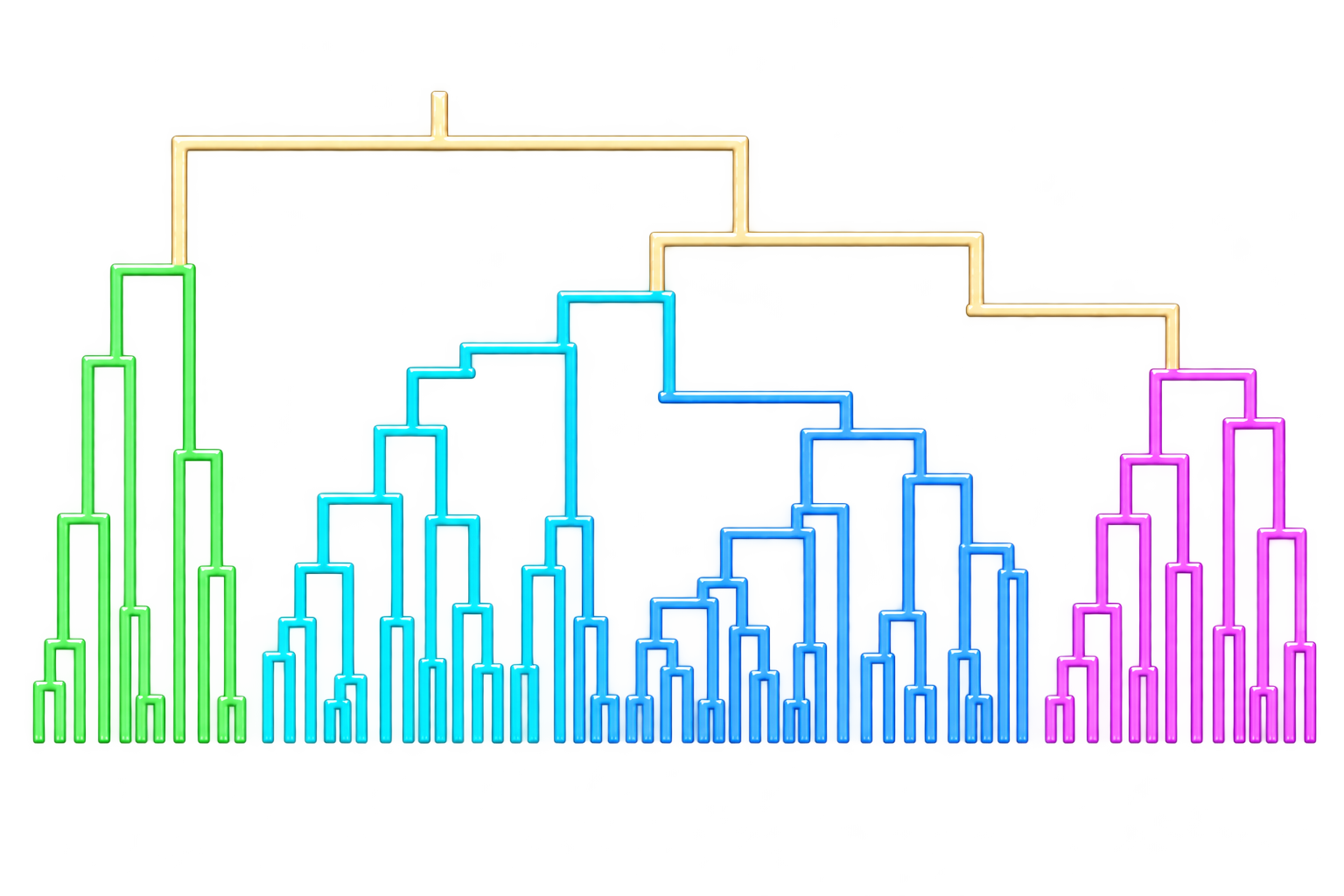
Practise a spot in Train. Make your own decision before you look at the answer.
Bring an exported hand into Hands. Revisit the board, the ranges and the line you chose.
Compare actions and frequencies. Use Library to understand the idea behind the strategy.
Return to similar spots. Apply what you learned, then review your next session.
Affordable
Fast
Beautiful
So how can we solve it?
2007
Counterfactual regret minimization (CFR) learns a strategy by comparing the actions it took with the alternatives it could have taken.
The CFR paper ↗2015
PioSOLVER brings custom postflop solving to players: choose ranges, stacks and bet sizes, then study the resulting strategy.
PioSOLVER ↗
2017
DeepStack combines local search with a neural network trained to estimate what happens beyond it. It beats professional players in heads-up no-limit Hold’em.
The DeepStack paper ↗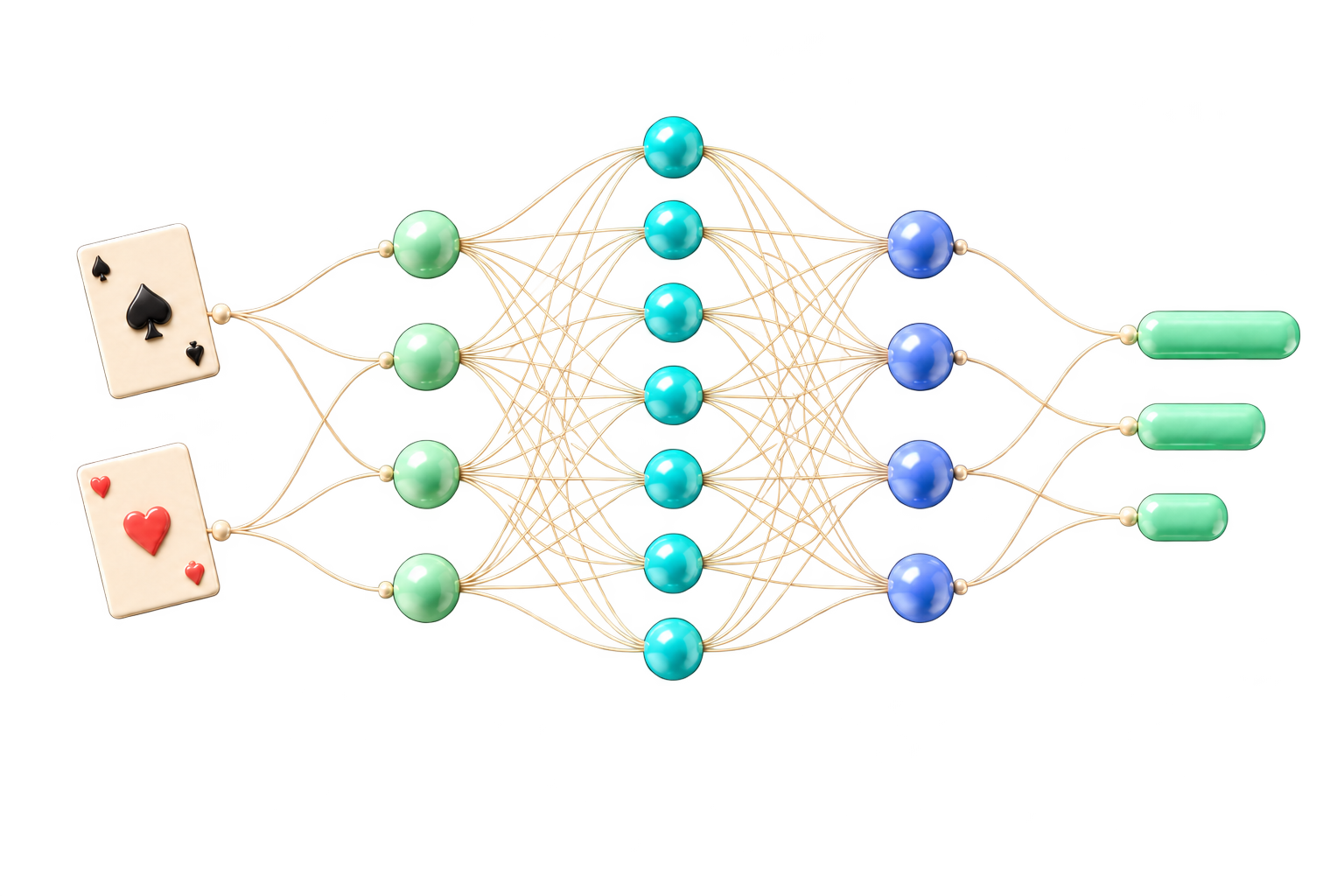
2019
Discounted CFR reweights earlier regrets and strategy contributions. The past still teaches the solver, but does not always carry the same weight.
The DCFR paper ↗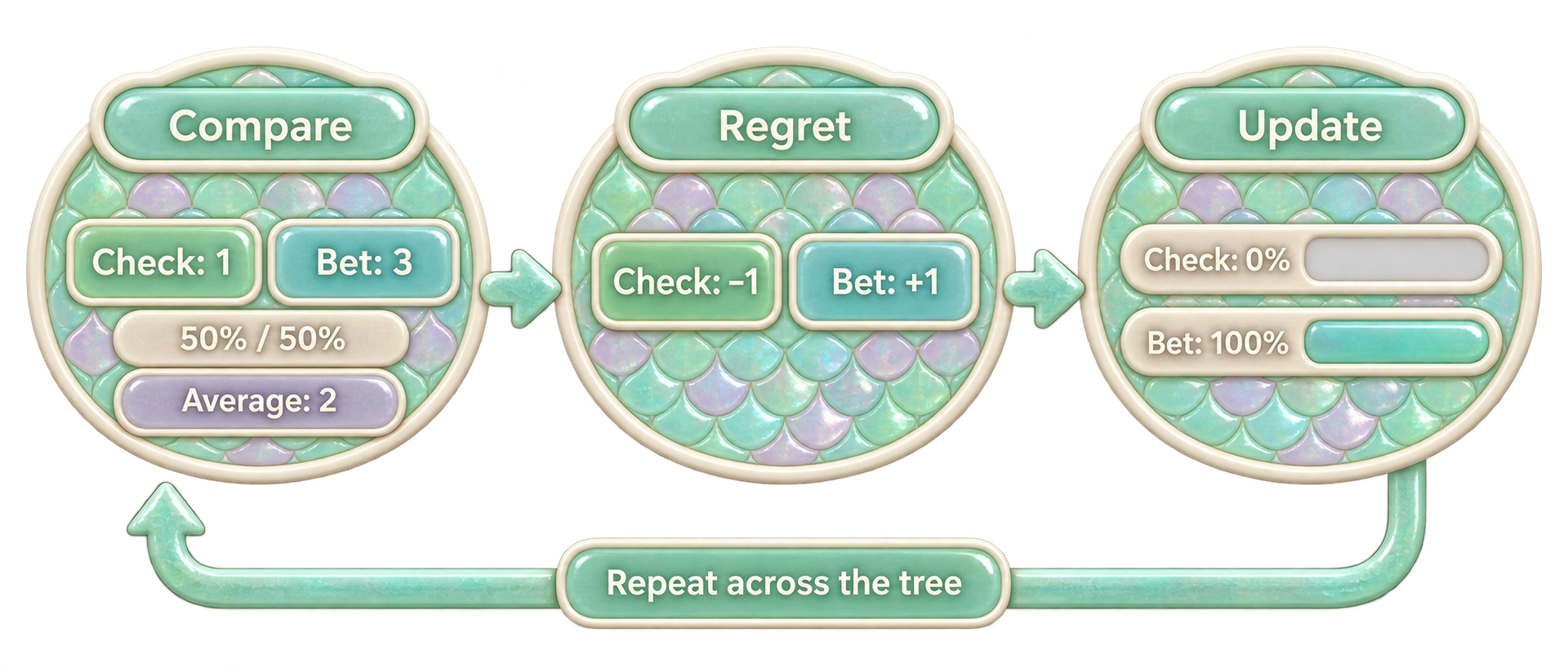
2019
Pluribus outperforms professionals in six-player no-limit Hold’em, a breakthrough in poker AI with several opponents.
The Pluribus paper ↗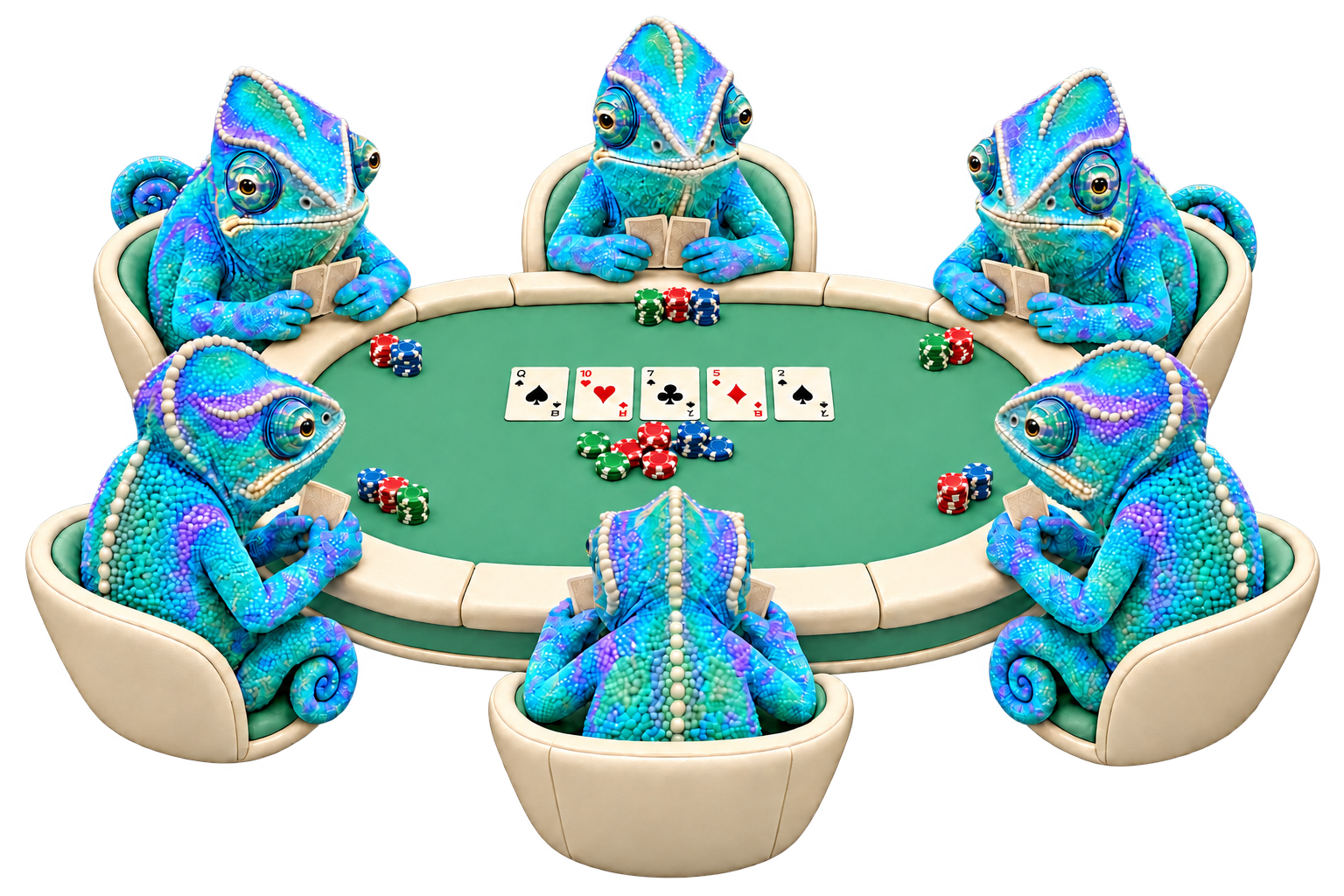
2023
GTO Wizard AI launches with the Ruse team. Browser study expands beyond fixed libraries to solving custom ranges, stacks and betting trees.
GTO Wizard AI launch ↗
We’re developing CAP5 and full-river CAP3 trees to make accurate, on-demand poker study affordable.
CFR compares each action’s value with the value of the current strategy. The difference is regret: how much better that alternative could have done.
Actions with positive accumulated regret get more weight next time. Repeat across the tree, then average the strategies.
Our engine uses DCFR, which discounts earlier regrets and reweights the strategy average as it learns.
Read the research ↗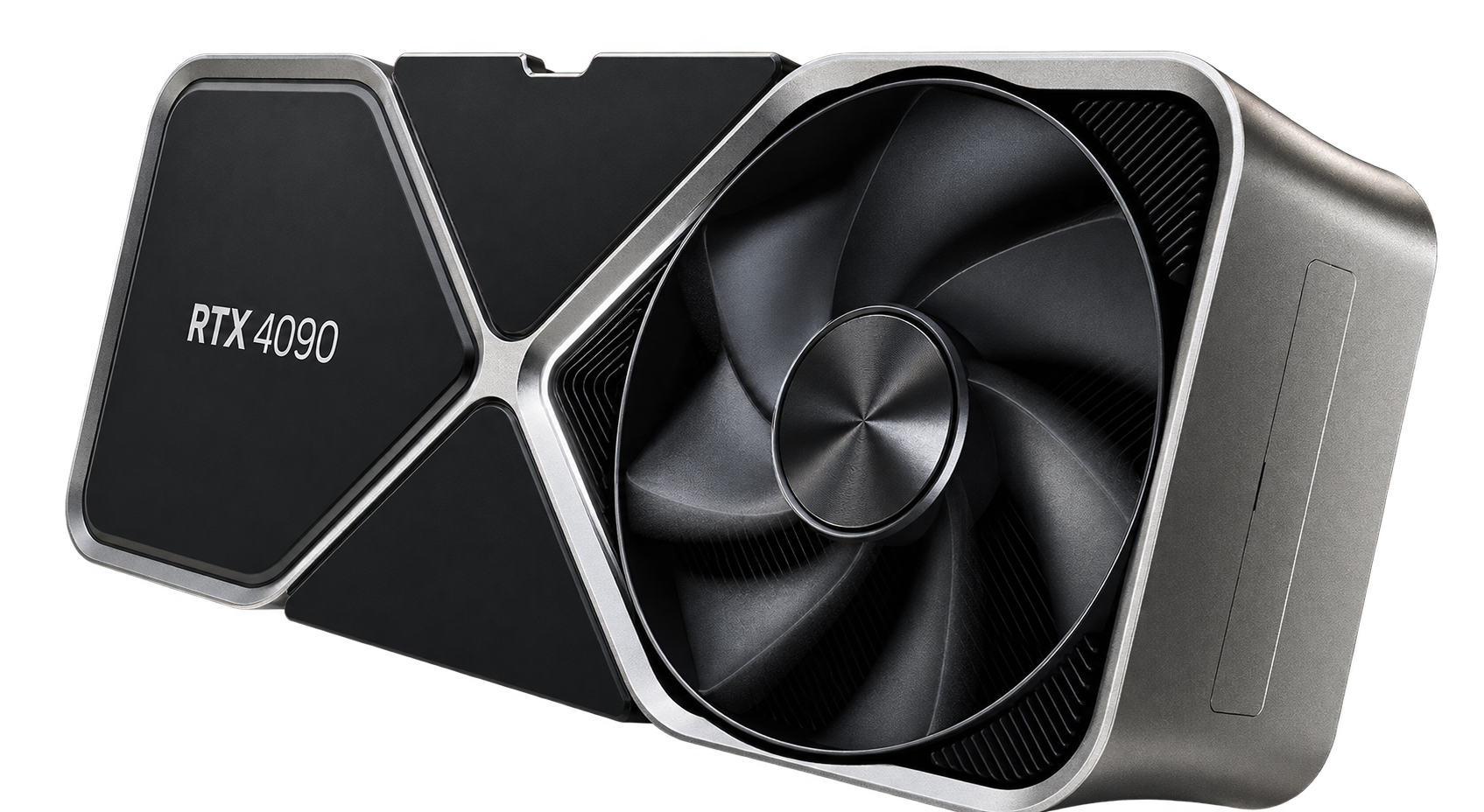
A graphics card runs many small calculations in parallel. Our GPU engine uses that to update hand values and regrets across the betting model.
As hardware and algorithms improve, the computational barrier falls. Problems that once cost too much become practical to study.
A betting tree lays out the actions the solver can compare. Ours use 33%, 75% and 150% pot sizes, with all-in and minimum-raise rules.
Our existing CAP5 study model allows deeper betting sequences, but estimates river values at the turn boundary.
We’re also developing full-river CAP3: flop, turn and river within the chosen betting model. It limits raises to three per street, keeps all-in beyond the cap and allows a minimum raise as the first raise.
Best-response analysis measures how much a perfectly responding opponent could gain against a strategy inside its betting tree.
Our full-river CAP3 target is at most 0.5% of the pot. This is a development target within the CAP3 tree, not a guarantee against every possible bet size.
We compare reference calculations and check saved strategies too. A fast solve only matters if its accuracy holds.
For a future update, we’re working toward letting you choose a supported spot and calculate its strategy on demand.
The goal is affordable CAP5 and full-river CAP3 study without a high-end graphics card on your own computer. Matching results can be reused instead of calculated again.
We’ll prioritise new trees around player demand, and measure accuracy, waiting time and cost before release.